


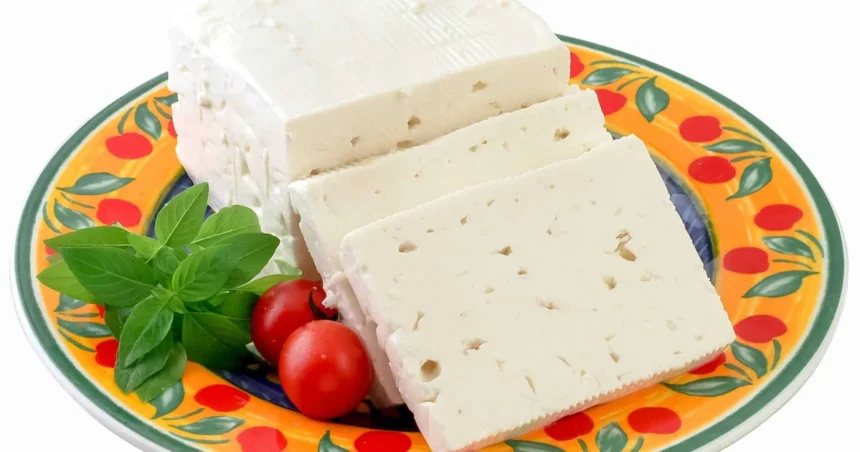
Feta has always occupied a narrow corner of the food world. It can only be made in specific parts of Greece, from specific animals, under strict rules. That concentration is what makes it special — and right now, it’s also what makes it vulnerable.
A disease outbreak that began quietly in August 2024 has spread across Greek livestock regions, triggering mass culls and raising serious questions about how much authentic feta will be available in 2026 and beyond.
Here’s what’s actually happening, what it means for the cheese on your shelf, and how worried you should be.
Why Feta Is More Exposed to Supply Shocks Than Most Cheeses
Most cheeses can be made almost anywhere, from almost any dairy herd. Feta cannot. Under EU law, it holds Protected Designation of Origin (PDO) status, which means only cheese made in specific Greek regions — using sheep’s milk, with up to 30% goat’s milk — can legally be called feta in the European Union.
That rule protects the product’s authenticity. But it also creates a single point of failure.
About 80% of Greece’s sheep and goat milk goes directly into feta production. There’s almost no buffer. If the national herd shrinks, feta output shrinks with it — and because Greece exports a significant share of its feta, any drop in raw milk supply ripples outward into global markets, not just Greek supermarkets.
Think of it like cocoa. A disease affecting even a small fraction of cocoa-growing trees in West Africa can move global chocolate prices, simply because supply is so geographically concentrated. Feta works the same way. A relatively small loss in Greece’s livestock population can have an outsized effect on what consumers in Germany, the UK, or the United States pay for authentic feta.
The Sheep and Goat Pox Outbreak, by the Numbers
The outbreak of sheep and goat pox (SGPV) began in Greece in August 2024. It spread primarily through central and northern Greece — both significant livestock regions — and has been difficult to bring fully under control.
By late 2025, around 420,000 to 500,000 animals had been culled, depending on the source and timing of the estimate. By early March 2026, RTÉ reported that the figure had surpassed 480,000. That represents roughly 5% of Greece’s entire sheep and goat herd.
Sheep and goat pox is a highly infectious viral disease. There is no cure, though an effective vaccine exists. Controlling an outbreak relies on a combination of vaccination campaigns, culling infected and exposed animals, restricting animal movement, and tightening farm biosecurity.
One important clarification: sheep and goat pox is an animal disease. It does not pose a food safety risk to humans. Consumer concern here is entirely about supply and price — not about any risk from eating the cheese.
It’s also worth noting that the situation is still developing. The figures reported here reflect data available through early 2026, and the numbers may continue to change as the outbreak evolves.
Where the Shortage Risk Actually Stands Right Now
This is the question most people want answered: is there a shortage happening now, or is this still a future risk?
The honest answer is: it’s primarily a forward-looking concern, but the pressure is real and building.
Through late 2025, overall sheep and goat milk production in Greece remained broadly comparable to the previous year. Industry groups noted this was partly because not all of the culled animals were dairy-producing females. The impact on raw milk volumes was cushioned — for the time being.
The European Dairy Association stated that the effect on raw material for PDO and PGI cheese production had been “not so significant” up to that point. But it also issued a clear warning: if the outbreak continues or worsens, Greece will face shortages of raw materials for feta and other protected cheeses.
Greek media and agricultural experts are framing 2026 as the year to watch. The risk is accumulating, even if supermarket shelves haven’t yet shown visible gaps.
How Greece and the Industry Are Responding
Greek authorities have not been passive. In response to the outbreak, they implemented movement restrictions on animals in affected regions, increased veterinary inspections, established disinfection checkpoints, and tightened access controls for vehicles entering farms. Grazing bans were put in place in some areas to slow transmission between flocks.
The Greek Dairy Industries Association has been coordinating with government ministries to monitor milk supply and discuss potential policy responses. Vaccination campaigns are ongoing, though containing a fast-moving disease across multiple regions takes time.
These measures reflect a serious response, not a chaotic one. The disease is not unmanageable — it has an existing vaccine and established control protocols. The question is whether the outbreak can be brought under control quickly enough to prevent a meaningful production gap in 2026.
What This Could Mean for Consumers, Restaurants, and Retailers
If the outbreak continues to reduce Greece’s livestock population and milk yields, the most likely consequence for consumers is a price increase for authentic Greek feta rather than empty shelves. Supply won’t disappear overnight — but it may tighten enough to push prices noticeably higher.
For restaurants, particularly those in the Mediterranean or Middle Eastern food space, even a 15–20% rise in feta costs can prompt menu adjustments. Some may use smaller portions, swap feta for alternative white cheeses in certain dishes, or quietly shift to “feta-style” products that aren’t subject to PDO restrictions.
Retailers may respond similarly — introducing smaller pack sizes, bringing in private-label brined white cheeses, or prominently labeling authentic Greek feta to justify a higher price point.
For home cooks, the practical impact depends on how far the shortage develops. Feta substitutes do exist — Bulgarian white cheese, Danish-style brined cheese, and various cow’s-milk alternatives are widely available outside the EU. They won’t replicate the exact flavor and crumbly texture of authentic Greek feta, but they can work well in many recipes.
The key distinction to keep in mind: in the EU, only cheese made under Greek PDO rules can be called “feta.” Outside the EU, the term is used more loosely on products made from cow’s milk in other countries. Those products won’t be directly affected by the Greek outbreak, but they’re also a different product.
The Longer-Term Picture for Greek Farmers and Feta Supply
For the sheep and goat farmers at the center of this story, the damage is already tangible. Losing part of a flock to mandatory culling means immediate income loss. Movement restrictions disrupt grazing patterns that have been in place for generations. Farmers may struggle to fulfill milk contracts with local dairies, putting long-term agreements at risk.
Even with government compensation for culled animals, rebuilding a herd takes years. Sheep and goats don’t reach productive age quickly. A large-scale loss of breeding stock isn’t reversed in a single season — which is why the milk supply impact from this outbreak may be felt well into the mid-2020s, even after the disease itself is brought under control.
For coverage of food supply trends and market developments, The Weekly Business tracks stories like this across agriculture, retail, and consumer goods.
There is also a broader conversation starting to take shape around animal health infrastructure, compensation schemes for farmers, and whether Greek agricultural policy needs to invest more in disease preparedness for its livestock sector — given how much of the country’s food identity and export value depends on those animals.
The Bottom Line
A feta shortage is not yet a confirmed reality. But the conditions that could produce one are clearly in place and developing. Roughly 5% of Greece’s sheep and goat herd has been culled since August 2024. Milk production has held up so far, but industry groups are openly warning that a continued outbreak will change that.
The structure of feta production — geographically locked, biologically concentrated, heavily export-dependent — means that even moderate losses can move markets. And unlike many agricultural disruptions, this one can’t be solved by sourcing from another country. By legal definition, authentic feta can only come from one place.
Whether 2026 brings noticeable shortages or just higher prices will depend on how effectively Greece can contain the outbreak over the coming months. For now, it’s a situation worth watching — especially for anyone who uses feta regularly, whether in a home kitchen or a commercial one.
Read Also:
- Diet Coke Shortage: Why It’s Happening and How Long It Lasts
- Is There a Salt Shortage? What’s Really Happening in 2026
- Blueberry Shortage in 2025–2026: Causes and Impact