


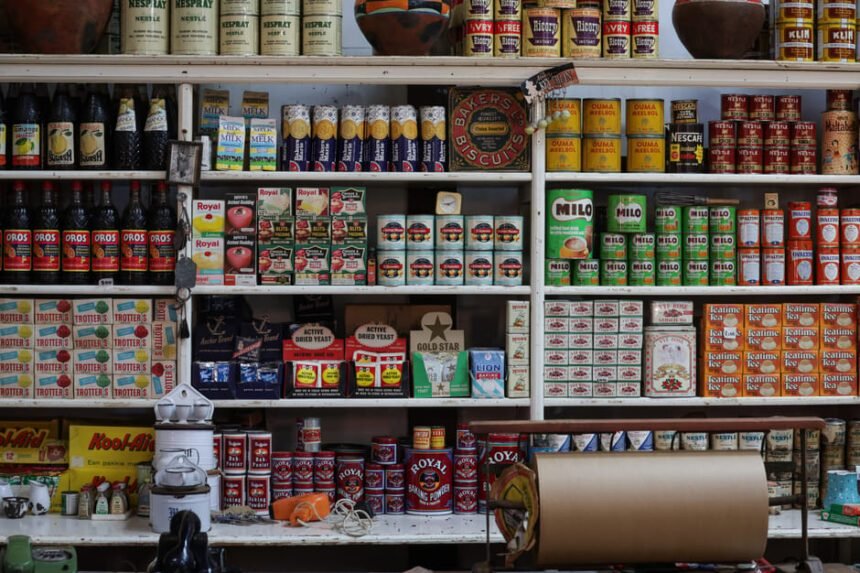
In late 2011, supermarket shelves across Norway went bare of one of the most basic kitchen staples — butter. A wealthy, oil-rich nation with a well-functioning food system had, in a very real sense, run out of it just weeks before Christmas. The story made headlines around the world, partly because it seemed so absurd. How does a modern, prosperous country run out of butter?
The answer involves a rainy summer, a diet trend, a state-backed dairy monopoly, and a trade policy that made importing butter more trouble than it was worth — until it suddenly wasn’t. This article walks through what happened, why it happened, and what it tells us about food supply chains and the limits of agricultural protectionism.
A Country Without Butter — The Basic Facts
The shortage became acute in November 2011. Butter deliveries would arrive at stores and sell out within minutes. Shoppers lined up early, bought as much as they could carry, and came back to find empty shelves. For a country in the middle of its peak Christmas baking season, this was not a small inconvenience.
Norwegian Christmas traditions lean heavily on butter. Holiday cookies, cakes, and pastries are central to the season, and home bakers need significant quantities of it. The timing of the shortage — hitting precisely when demand was already at its annual peak — made everything worse.
The Norwegian government eventually stepped in, and butter supplies returned to something close to normal by early 2012. Despite the dramatic media coverage, this was not a humanitarian emergency. Most people found workarounds, and many Norwegians who lived near the Swedish border simply drove across and bought butter there, where supplies were entirely unaffected. Still, it was a genuine supply failure, and it exposed real weaknesses in how Norway managed its dairy sector.
Three Causes That Collided at the Wrong Time
It would be easy to pin the shortage on one villain — a bad harvest, a greedy company, a clumsy government. But the 2011 butter crisis was the result of several problems arriving at once, and no single factor was solely responsible.
A Wet Summer That Hurt Milk Production
Norway’s summer of 2011 was unusually wet. Soggy pastures meant cows had less quality grass to graze on, which reduced their milk output. Overall milk production fell by roughly 20 million liters compared to a normal year. Less milk meant less cream, and less cream meant less butter. The country’s dairy system entered autumn already running below normal capacity.
A Sudden Spike in Demand
At the same time, high-fat, low-carb diets — often called LCHF — had surged in popularity in Norway. More people were cooking with butter, adding it to coffee, and using it in ways that had not been common before. Butter demand reportedly rose by around 20 to 30 percent in November 2011 compared to typical levels. That kind of demand jump, in any supply system, is hard to absorb quickly. In a system already strained by lower production, it was enough to empty shelves.
Tine Misjudged the Demand Signal
Tine is Norway’s dominant dairy cooperative and the country’s largest butter producer. As demand climbed, Tine did not adjust its forecasts or production quickly enough to respond. The cooperative later pointed to the poor summer weather and unexpected dietary shifts as explanations, but critics — including members of Norway’s Progress Party — were not satisfied. The party went so far as to demand that Tine compensate retailers for an estimated NOK 43 million in lost sales.
The broader point is this: weather reduced supply, diet trends boosted demand, and the company at the center of the system failed to spot the gap in time. All three forces pulled in the same direction at once.
Why Norway Couldn’t Just Import More Butter
For most countries facing a domestic food shortage, the obvious fix is to import more from abroad. Norway could not do this easily, and the reason comes down to trade policy.
Norway maintains steep import tariffs on dairy products. These tariffs exist to protect Norwegian farmers from cheaper foreign competition — the logic being that without them, imported butter from the European Union would undercut domestic producers and threaten the viability of Norwegian dairy farming. Under normal circumstances, this system works quietly in the background. Farmers are protected, domestic production satisfies demand, and consumers rarely think about it.
But the tariff system also functions like a valve that is kept tightly closed. When shelves went empty in November 2011, there was no easy way to turn on the import tap quickly. The tariffs made foreign butter too expensive to import at commercial scale, even as Norwegian consumers were desperate for it.
In December 2011, the government responded by temporarily slashing the butter import tariff by more than 80 percent. That single policy move opened the door to emergency imports and, combined with increased domestic production efforts, helped normalize supplies over the following weeks. Importantly, this was a short-term fix. Norway did not dismantle its protectionist dairy model. The tariffs returned, and the broader structure of domestic agricultural support remained in place.
Panic Buying, Border Runs, and a Butter Smuggler
While policymakers debated tariff cuts, ordinary Norwegians were doing what people always do in a shortage — improvising.
Retailers in some cases began rationing butter, limiting how much any one customer could buy. Media coverage, which was extensive and dramatic, accelerated a “stock up fast” mentality. People who might have bought one pack of butter bought three or four, which of course made the shortage worse for everyone else. This feedback loop — scarcity triggers hoarding, hoarding deepens scarcity — is common in shortage events and is not unique to Norway.
For Norwegians near the Swedish border, the solution was straightforward: drive across and buy butter at any Swedish supermarket, where everything was perfectly normal. Swedish and Danish neighbors were sometimes jokingly described in media coverage as “butter heroes” for keeping Norwegian kitchens supplied.
The most memorable story from the crisis involved a Russian citizen caught at the Norwegian border carrying roughly 200 pounds — around 90 kilograms — of butter. Norwegian authorities responded by issuing warnings against buying butter from strangers. The fact that such a warning was even necessary says something about how strange the situation had become.
For many international observers, that detail — a butter smuggler, a government warning about black-market dairy — was what turned a regional food story into a global curiosity. A rich Scandinavian country, home to one of the world’s largest sovereign wealth funds, was dealing with butter contraband. It was easy to laugh at, and many did. But underneath the absurdity was a real policy failure worth understanding.
What the Crisis Reveals About Food Supply Chains
The Norwegian butter shortage of 2011 is often treated as a quirky footnote — a “remember when” story about a country that briefly lost access to something basic. But it holds some genuinely useful lessons.
First, highly regulated food markets can become rigid. Norway’s dairy sector was built to protect farmers, and it does that reasonably well. But the same protections that shield domestic producers from foreign competition also slow the system’s ability to respond when something goes wrong internally. When the valve is closed by design, opening it in an emergency takes time and political will.
Second, consumer behavior can change faster than supply systems. The LCHF diet trend did not develop overnight, but it accelerated quickly enough that Tine — with full access to domestic sales data — still missed it. In industries dealing with perishable goods, demand forecasting matters enormously. A 20 to 30 percent surge in butter demand is not subtle, but it was apparently not caught early enough to prevent empty shelves.
Third, short-term supply crises in one category tend to cascade through adjacent behaviors. When butter disappeared, media coverage amplified panic, which drove more hoarding, which deepened the shortage. The physical supply problem and the psychological response to it fed each other.
Reporting on events like this — where policy, supply chains, and consumer behavior intersect — is something The Weekly Business covers regularly, especially when what looks like a simple market failure turns out to have layered causes.
A Quick Resolution, and a Lasting Case Study
By early 2012, the crisis was over. Tariff cuts had allowed imports to arrive, domestic production had stabilized, and Norwegian butter was back on supermarket shelves in reasonable quantities. Life returned to normal, Christmas baking resumed, and the whole episode faded from daily concern.
What remained was a case study that economists, supply chain researchers, and food policy writers still reference today. It illustrates, in unusually clear terms, what happens when weather, consumer trends, a dominant market player, and a rigid trade policy all interact badly at the same moment.
The 2011 Norwegian butter crisis was not a catastrophe. No one went hungry. Most people found ways to cope, and the government moved quickly enough to prevent the situation from dragging on past the holiday season. But it was a real and avoidable disruption, and it showed that even well-organized, prosperous societies are not immune to supply chain failures — especially when the systems designed to provide stability are also designed to resist outside input.
Sometimes the valve needs to open faster than the policy allows. That is the simplest lesson Norway’s butter crisis left behind.
Read Also: