


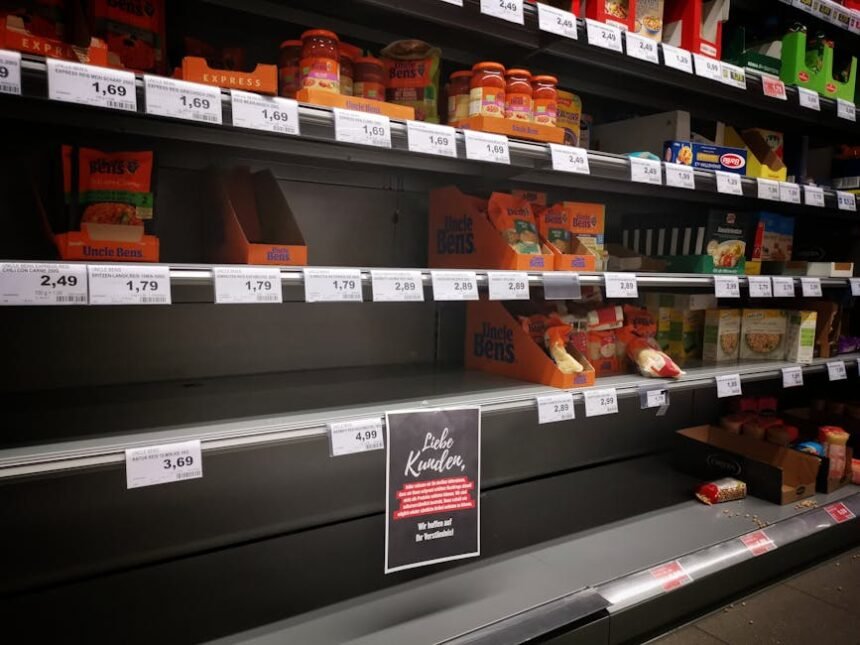
Avocados haven’t vanished from grocery stores, but if you’ve noticed higher prices or thinner displays lately, you’re not imagining things. In 2025 and 2026, the avocado market has become tighter, more expensive, and harder to predict — and it didn’t happen for just one reason.
This article breaks down why supply has tightened, which regions and factors are most responsible, what recent disruptions actually looked like, and what consumers and businesses can reasonably expect going forward.
What “Avocado Shortage” Actually Means
When the phrase “avocado shortage” trends online, it usually means prices are rising and supply is tight — not that avocados have disappeared entirely. That distinction matters, because the two things feel very different at the checkout counter.
There are two types of disruptions worth separating. Short-term shocks include things like import suspensions, seasonal transitions between growing regions, or a single bad harvest. Structural pressures are slower-moving: long-term water scarcity, climate shifts, and the fact that global demand has grown faster than supply in several recent periods.
Both types are happening at once right now, which is part of why the headlines have been louder than usual. Mexico’s avocado exports are actually projected to grow about 7% year-on-year in 2026, according to USDA data. The situation is volatile, not catastrophic — but that volatility has real consequences for prices and availability.
Why Supply Keeps Getting Disrupted
Avocado trees are not forgiving crops. They need consistent water, mild temperatures, and stable growing conditions. Too much heat before flowering, too little water during fruit development, or an unexpected frost can significantly cut a season’s output.
The bigger structural problem is how much of the world’s avocado supply comes from one place. Mexico dominates global exports by a wide margin. When something goes wrong there — whether it’s drought, a safety incident, or a political disruption — the ripple effects are felt almost immediately in the U.S., Europe, and beyond.
Climate events have hit multiple regions in overlapping ways. Mexico and California have both dealt with drought and water stress. Morocco offers a sharp example of how quickly things can unravel: pre-season heat waves destroyed roughly half of the country’s expected crop, and exports fell by about 42% in a single year. That collapse was then made worse by port closures and a shortage of shipping containers, which meant that whatever fruit survived on the trees had trouble reaching buyers in time.
Supply chain costs and logistics bottlenecks play a bigger role than many people realize. Even when a harvest is adequate, fruit can still arrive late, in smaller volumes, or in worse condition — turning what should be a manageable season into a perceived shortage.
The 2025–2026 Disruptions That Made Headlines
Several specific events in the past year turned background market tension into front-page news.
U.S. authorities temporarily suspended Mexican avocado imports due to safety concerns involving inspectors. Analysts at the time warned that if the ban held, domestic U.S. supply could run out within roughly one and a half weeks. Prices spiked quickly, and the event was a clear reminder of how dependent the U.S. market is on a single source.
Then, in May 2026, two major industry players — Mission Produce and Westfalia Fruit — declared force majeure as the Mexican growing season wound down. They warned U.S. retailers to expect delays and reduced order fulfillment. Both companies moved to redirect volume from Peru, Colombia, and California to partially cover the gap, but that only goes so far.
The real-world effects were visible to anyone paying attention. Some restaurant chains added surcharges on guacamole or quietly reduced portion sizes. Grocery store avocado displays ran thin or shifted toward smaller, lower-grade fruit. Per-unit prices at retail climbed noticeably.
These events illustrate a pattern that’s likely to repeat. A regulatory trigger, a seasonal transition, or a logistics problem can quickly turn a tight market into a shortage story — especially when buyers are already stretched and backup supply is limited.
Where Supply Is Holding Up — and Where It Isn’t
The picture isn’t uniformly bleak. Some regions are actually performing well.
California is one of them. The California Avocado Commission projected around 330 million pounds for 2026 — the third consecutive year the state came in above 300 million pounds. That’s a sign of relative stability, even as broader market conditions stay choppy.
Mexico’s overall production is still growing. The USDA forecast for 2026 puts Mexican avocado exports at 1.31 million metric tons, which represents continued expansion. The challenge is that global demand is rising in parallel, so more supply doesn’t automatically mean lower prices or easier availability.
Early-season 2026 shipments ran notably behind historical norms. By mid-March, shipments represented about 3% of the projected annual crop — well below the typical 8% at that point in the season. That slow start contributed to the perception of tightness, even before the force majeure declarations in May.
Other origins like Peru and Colombia are expanding, but they face their own climate and logistics limitations. And there’s a redistribution problem worth understanding: when Mexican supply tightens and exporters redirect more volume toward the U.S. to meet demand, European and Asian markets can end up shorter as a result. A solution in one market can quietly create a problem in another.
The Environmental Side of the Story
Avocado production doesn’t just face environmental risks — it also creates them. Expansion of orchards in Mexico, particularly in the state of Michoacán, has been linked to deforestation and pressure on forest ecosystems.
In response, industry groups APEAM and the Mexican Hass Avocado Importers Association announced that starting in January 2026, avocados grown on illegally deforested land will no longer qualify for export to the U.S. Orchards established on land cleared between 2018 and 2024 may still qualify if growers compensate for lost ecosystem services. Land cleared from 2025 onward will never be eligible for export certification.
The long-term goal is for all Mexican avocado exports to be deforestation-free by 2030. Industry estimates suggest that over 85% of existing orchards can qualify under the new rules immediately. That’s a meaningful commitment, and it’s worth noting because it may limit how quickly new production land can be brought online — which has implications for future supply growth.
How the Industry Is Adapting
Growers and exporters aren’t standing still. Across producing regions, there’s investment in better irrigation infrastructure, climate-resilient farming practices, and early warning systems to protect orchards before weather events cause serious damage.
Morocco, despite its difficult recent season, is moving toward port improvements and market diversification — targeting buyers in the Middle East and Asia rather than relying solely on European customers who may already have supply from elsewhere.
For the major export companies, multi-origin sourcing has become a survival strategy rather than a backup plan. Having supply relationships across Mexico, Peru, Colombia, and California simultaneously means that when one region has a bad season or a regulatory disruption, there’s somewhere else to turn. It doesn’t eliminate shortages, but it can soften them.
For more coverage of global supply chain and commodity market trends, The Weekly Business tracks developments across industries including food and agriculture.
What to Expect Going Forward
The honest answer is that avocado supply will remain available but volatile. Projections show continued production growth from Mexico and stable output from California, so outright scarcity is unlikely in the near term. But recurring tightness — driven by seasonal transitions, weather events, or regulatory moments — is probably the new normal.
Prices are likely to stay elevated compared to where they were a decade ago. Structural factors like climate stress, water constraints, and sustainability rules all limit how fast supply can grow to meet rising demand. The “superfood” boom that pushed avocados into mainstream consumption in North America and Europe happened faster than the industry could comfortably scale.
For consumers, that means occasional price spikes and some variability in quality and availability. For restaurants and retailers, it means building more flexible sourcing arrangements and being less dependent on a single growing season or country of origin.
The avocado shortage story isn’t about running out. It’s about a crop that became globally essential faster than the systems around it could reliably keep up — and the ongoing work of adjusting to that reality.
Read Also: