


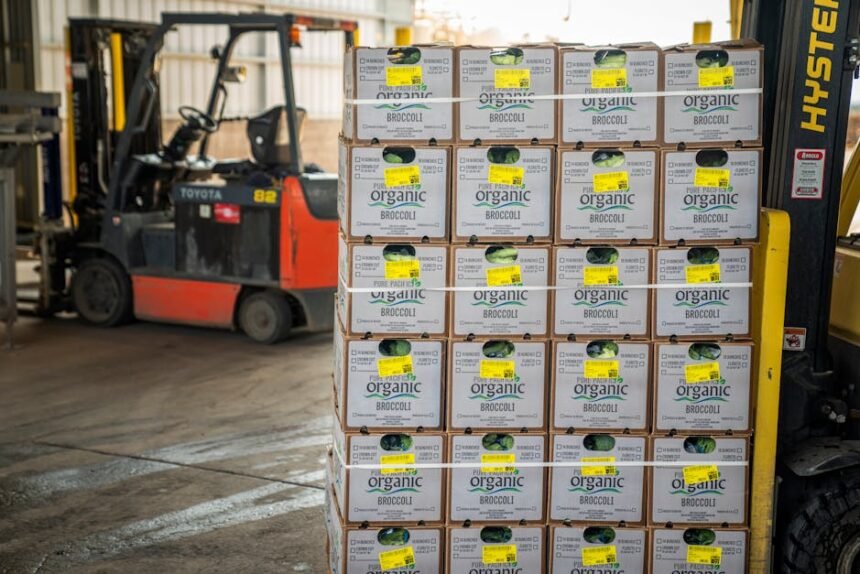
Broccoli has quietly become one of the most talked-about vegetables in European wholesale markets in early 2026 — not for its nutritional profile, but because it has become genuinely hard to find and noticeably more expensive. Shoppers are seeing thinner shelves, pulled promotions, and higher prices. Restaurants are quietly swapping it off menus.
This article breaks down why the shortage is happening, where it is most acute, how long it is likely to last, and what you can do in the meantime.
What Is Actually Happening With Broccoli Supply Right Now
To be clear upfront: this is a real but regional and time-limited disruption. It is not a permanent global crisis, and broccoli has not disappeared from all markets everywhere.
The root cause is weather in southern Spain. The Region of Murcia — one of Europe’s most important sources of winter broccoli — experienced heavy, persistent rainfall at the end of 2025 and into early 2026. That rain made it impossible for farmers to carry out scheduled transplanting on time. When planting is delayed, the harvest is delayed too, and that gap eventually shows up as empty shelves.
Industry figures in Murcia have described the 2025/26 brassica season as one of the wettest on record. The supply shortfall is expected to be most acute during weeks 12 to 14 of 2026 — roughly mid-to-late March — before easing as delayed plantings finally come into harvest.
At least one Spanish exporter has said the European shortage could last at least a month, with very low availability and rising prices already visible across the market. In the UK, the picture is similar for some varieties. A February 2026 crop report rated Tenderstem broccoli as “amber” — meaning availability was tightening due to weather-related yield reductions and the natural seasonal handoff between growing regions.
Why Spain Matters So Much to European Broccoli Supply
It might seem strange that bad weather in one Spanish region can cause a broccoli shortage across multiple European countries. But once you understand how the supply chain is structured, it makes sense.
Murcia supplies a large share of Europe’s winter broccoli and cauliflower. When production there stalls, there is no immediate alternative source that can step in and fill the gap at scale. Broccoli supply rotates across regions throughout the year — Spain and Morocco dominate in winter, while Dutch, Belgian, and UK production comes online in late spring and summer.
The problem is the transition window between these regions. If weather disrupts the winter supplier at the wrong moment, it leaves a short but sharp gap before the next regional supply ramps up. By the time anyone notices the problem, the gap is already several weeks along.
Think of it like a just-in-time supply chain. Supermarkets depend on regular shipments from specific regions. If the main source pauses — even briefly — retail shelves feel it within weeks. There is no large buffer of stored fresh broccoli sitting in a warehouse somewhere, waiting to be used.
How Shortages Reach Consumers — Prices, Menus, and Shelf Gaps
When wholesale prices rise, supermarkets have a few options: absorb the cost temporarily, raise shelf prices, pull promotional deals, or accept smaller or lower-quality heads. In practice, it is often a combination of all four.
Spanish exporters have already flagged rising prices for both broccoli and cauliflower during the current shortage window. Consumers who shop regularly will likely notice that the deals they expect have disappeared, and the heads available are smaller than usual.
The foodservice sector tends to feel it more sharply. In April 2026, a commodity notification from a wholesale distributor described “critically short supplies across all varieties and growing regions” for broccoli in parts of the supply chain. When alerts like that go out, restaurants and caterers face order limits, price hikes, or both.
The practical response from kitchens is to substitute. Frozen broccoli, seasonal greens, cabbage, and other brassicas often step in when fresh broccoli becomes too expensive or unreliable. Most diners would not even notice the change on the plate.
There is also a specific issue with purple sprouting broccoli, which is a different variety from standard crown broccoli. Some UK farmers have reported their purple sprouting crops as completely devastated following severe winter conditions, with the National Farmers Union warning of significant shortages and higher prices for that particular variety. This is worth separating from the broader Spanish shortage — they are two distinct problems affecting different types of broccoli.
Not All Broccoli Reports Say the Same Thing
If you have been reading around this topic, you may have come across what look like contradictory headlines. Some sources describe serious shortages. Others say supplies are strong and markets are expected to ease. Both can be true at the same time.
The differences come down to three factors: region, variety, and supply chain segment.
A US distributor reporting strong broccoli supplies is talking about a completely different growing region and supply chain than a Spanish exporter flagging European shortages. Standard crown broccoli, Tenderstem, and purple sprouting broccoli are different products with different growing regions, harvesting windows, and supply vulnerabilities. And the experience of a large supermarket chain will differ from that of a small independent restaurant.
So when you see a “broccoli shortage” headline, it is worth asking: which variety, which country, and which part of the supply chain? The answer shapes how much — if at all — it affects what you find at your local shop.
Is This Part of a Bigger Pattern?
This particular shortage is being driven by a single weather event in a single region. But it is worth noting that weather-driven disruptions to broccoli supply are not unusual. What changes from year to year is where the disruption hits and how severe it is.
Broccoli is sensitive to both excessive rain and cold snaps during critical growth stages. The 2025/26 season in Spain happened to be exceptionally wet. A different year might bring drought, a cold snap at the wrong time, or a heat wave during heading. The underlying vulnerability — heavy dependence on a small number of key growing regions, combined with tight seasonal supply windows — is not going away.
There is a broader conversation in agricultural circles about whether climate volatility is making these disruptions more frequent. Weather extremes do appear to be intensifying. But it would be an overstatement to say climate change alone is responsible for any single shortage. Labor availability, logistics, and the concentration of production in specific regions all contribute to how fragile or resilient supply chains are.
For regular coverage of food supply, agriculture, and business news, The Weekly Business tracks developments across these sectors.
What Consumers Can Do Right Now
The shortage is expected to be temporary. Industry sources in Spain suggested the sharpest supply gap would last around three weeks — roughly weeks 12 to 14 — before delayed plantings come to harvest and supply normalizes. Some exporters put the duration closer to a month. Either way, the disruption has a defined end in sight.
In the meantime, there are practical steps worth considering:
- Try frozen broccoli. Frozen products are processed and stored in bulk well in advance of fresh seasonal shortfalls. They are often unaffected by the same supply pressures and are nutritionally very similar to fresh.
- Switch to alternative brassicas. Kale, spring greens, cabbage, and cauliflower can substitute in most recipes. Note that cauliflower is also coming from Murcia, so it faces similar supply pressure — spring greens and kale are safer alternatives during this particular window.
- Wait for UK-grown production. According to the February 2026 crop report, UK-grown broccoli production is expected to accelerate under favorable conditions and improve availability into late May and early summer. If you are in no rush, the shortage should resolve naturally over the coming weeks.
- Grow your own. For gardeners, purple sprouting broccoli in particular is a variety that can be grown at home relatively easily. Seed suppliers have actively promoted this as a way to secure supply independently of the wholesale market.
The Bigger Picture
The 2026 broccoli shortage is a good illustration of how modern food supply works — and where it can break down. A concentrated production region, tight seasonal handoffs, and just-in-time logistics mean that even a few weeks of bad weather in one part of Spain can show up as higher prices and thinner shelves in supermarkets across Europe.
It is not a crisis. People are not going without food because of it. But it is a useful reminder of how many moving parts sit between a farm field and a dinner plate — and how little slack the system has when one of those parts stalls unexpectedly.
The shortage is expected to ease by mid-to-late April 2026 at the latest. Until then, flexibility in the kitchen is probably the most practical response most people can take.
Read Also: