


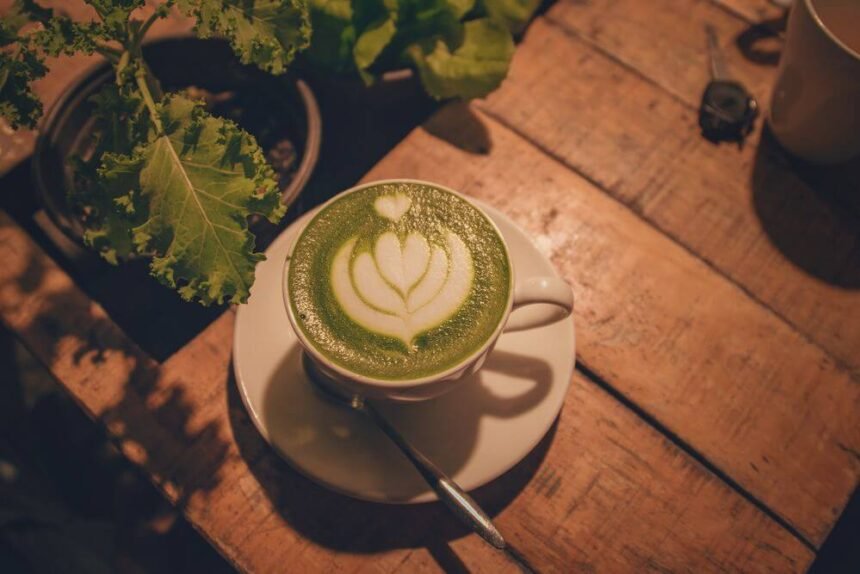
In early 2026, tea shops in Tokyo started posting purchase limits on matcha. Cafés in New York and London quietly pulled matcha lattes from their menus. What once looked like a minor supply hiccup has turned into a visible, global problem — and it is not going away quickly.
This article breaks down what is actually driving the 2026 matcha shortage, how serious it is, what it means for consumers and cafés, and what you can do to make smarter decisions while supply stays tight.
The Shortage Is Real — Here’s What the Data Shows
This is not just social media noise. The numbers behind the shortage are significant.
Japanese matcha exports reached roughly 6,889 tons between January and October 2025 — approximately triple pre-pandemic levels. Export volume surged around 42% in 2024 alone. That kind of growth burned through the buffer stocks that previously absorbed demand spikes, leaving the supply chain exposed heading into 2025 and 2026.
Prices at tencha auctions — tencha being the leaf used to make matcha — rose 170% for machine-picked material and around 220% for hand-picked, marking the largest single-year increase on record. That is not a minor adjustment. It is a structural signal.
On the ground in Japan, the shortage is equally visible. In February 2026, tea shops in areas like Ueno in Tokyo had limited stock, higher prices, and per-customer purchase limits. This is not just a Western import problem — it is affecting the source market too.
Western cafés are also feeling it in practical terms. Lead times that used to run one to two weeks have stretched to three to four weeks or longer. Some businesses have pulled matcha drinks from their menus entirely rather than deal with inconsistent supply.
Why Matcha Supply Cannot Simply Scale Up
The most common assumption people make is that producers can just grow more. The reality is more complicated.
Matcha starts as tencha, a shade-grown tea leaf that requires specific cultivars, weeks of canopy shading before harvest, and careful post-harvest processing. You cannot convert a field and expect to harvest premium matcha within a single season. The infrastructure — shading structures, experienced labor, stone mills — takes time and investment to build.
The production chain itself limits speed. After shading, leaves are hand- or machine-picked, steamed to stop oxidation, dried, de-stemmed and de-veined, and then stone-milled into powder. Every step requires precision. Stone-milling is particularly slow; a single mill can produce only around 30 to 40 grams of powder per hour.
Beyond logistics, Japan’s tea farming workforce is aging. Many farmers are in their 60s and 70s, with few younger successors taking over. That shrinks the area under active cultivation each year. Farmland is also shifting to other uses or less labor-intensive crops as the economics of tea farming grow harder to justify without a strong price incentive.
Climate volatility adds another layer of unpredictability. Irregular weather and late frosts affect both the yield and the quality of tencha, making annual output difficult to plan around.
High-grade ceremonial matcha — first-harvest, often hand-picked, from traditional regions like Uji — faces the tightest constraints of all and has seen the steepest price increases. There is simply no fast path to producing more of it.
What Drove Demand to Outpace Supply
Supply alone does not explain the shortage. Demand moved fast, and from multiple directions at once.
Matcha built a reputation as a health-conscious alternative to coffee — rich in antioxidants, with a steadier caffeine curve and no sharp crash. That attracted a growing base of consumers who were actively looking to shift away from coffee and energy drinks.
Social media did the rest. The distinctively green drink photographs well and travels well on short-form video. Cafés in major cities began featuring matcha lattes as a signature item, and the aesthetic appeal pulled in people who might never have considered drinking tea otherwise.
Post-pandemic interest in Japanese food culture and “authentic” ingredients also accelerated overseas market growth. Consumers in the US, Europe, and Southeast Asia started seeking out Japanese-origin matcha specifically, not just green tea powder in general.
The commercial expansion was not just a trend spike — it became sustained demand. Matcha lattes, desserts, and ready-to-drink beverages created a floor of ongoing consumption that had not existed five years earlier. When the 2024 demand surge hit, it depleted the stored tencha reserves that had previously cushioned shocks, and the system had nothing left to absorb what came next.
Quality Risks That Come With a Tight Market
When supply is short and prices are high, quality problems follow. This is one of the more practical concerns for both consumers and cafés right now.
Tight supply creates an opening for misrepresentation. Generic powdered green tea gets relabeled as matcha. Products using older harvests, more stems, or lower-grade processing get marketed as “ceremonial” or “premium.” Some brands quietly downgrade their blends rather than raise prices — the product looks the same in the tin, but tastes noticeably different.
A useful comparison: calling any powdered green tea “matcha” during a shortage is a bit like calling any sparkling wine “Champagne.” Authentic Japanese matcha comes from shade-grown tencha, specific cultivars, and traditional stone-milling. Generic powdered green tea is not the same product, even if the color looks similar.
Contaminants are also a concern with unverified low-priced imports from any origin. Experts recommend looking for products that include current lab test results and clearly disclose harvest year and growing region.
A few warning signs worth watching for:
- Very cheap “ceremonial” matcha — anything significantly under $25 per 30g is worth scrutinizing
- No harvest year or origin region listed on the packaging
- Dull, yellowish-green color rather than a bright, vivid green
- No lab testing documentation available from the seller
What This Means for Consumers and Cafés
For Home Drinkers
The temptation to stock up is understandable, but experts advise against it. Matcha degrades quickly — most opened tins are at their best within six to eight weeks. Buying six tins at once and storing them means the last few will taste noticeably flatter and more bitter by the time you get to them.
A better approach is to buy reasonable amounts from suppliers who are transparent about where their matcha comes from. Look for brands that list the harvest year, the growing region (Uji, Nishio, and Kagoshima are the main Japanese regions), and ideally provide access to lab testing results.
For everyday use, culinary-grade matcha from a reputable Japanese source is a practical option. Reserve ceremonial-grade for drinking straight, where the quality difference is most noticeable.
For Cafés and Businesses
Cafés that have not already locked in supply contracts should act sooner rather than later, particularly ahead of spring shipments. Distributors are increasingly prioritizing long-term partners over one-off buyers, and allocation limits on popular cultivars are already in place with some suppliers.
The harder decision is what to do with menu pricing and product availability. Quietly switching to a lower-grade powder without informing customers creates a trust problem down the line. The more sustainable options are either to raise prices with a clear explanation, reduce portion sizes, or offer matcha as a limited-availability item while supply is constrained.
Diversifying across multiple suppliers and growing regions also reduces vulnerability — relying on a single source for a single grade leaves little room to adapt when that supply gets disrupted.
For broader context on how supply chain pressures are reshaping business decisions across industries, The Weekly Business covers these trends on an ongoing basis.
What to Expect Going Forward
The short-term outlook through 2026 remains tight. Analysts expect continued price increases of roughly 5 to 15% annually across grades, with allocation limits persisting on premium cultivars. Some relief may come after the spring 2026 tencha harvest, but structural issues will not resolve in a single season.
Japan’s Ministry of Agriculture, Forestry and Fisheries has been encouraging farmers to convert more fields to tencha cultivation. Some producers are also shifting toward more mechanization to expand volume. These efforts will help at the margins, but they cannot quickly offset years of declining farmland and an aging workforce.
Over a longer horizon — 2027 to 2030 — the constraints may actually deepen as more farmers retire. The most likely outcome is that high-grade Japanese matcha becomes increasingly difficult to source outside of direct farm relationships, while lower-grade segments are filled more visibly by non-Japanese producers. Japanese-origin matcha, particularly ceremonial grade, is likely to function more and more as a premium category rather than an everyday commodity.
The Practical Takeaway
The 2026 matcha shortage is real, and it is being driven by a combination of factors that do not have a quick fix: structural limits on Japanese tea production, an aging farming workforce, climate unpredictability, and a decade of rapidly expanding global demand.
For most people, the right response is straightforward. Buy what you need, from suppliers who are transparent about origin and quality. Do not hoard. Be willing to pay more for verified Japanese-origin matcha, and be skeptical of products that seem too cheap given where the market currently sits.
The shortage will ease eventually — likely in stages, starting with modest relief after good harvests and gradually improving as more production capacity comes online. But expecting things to return to 2021 prices and availability is probably unrealistic. The matcha market has changed, and it is worth adjusting expectations
Read Also: