


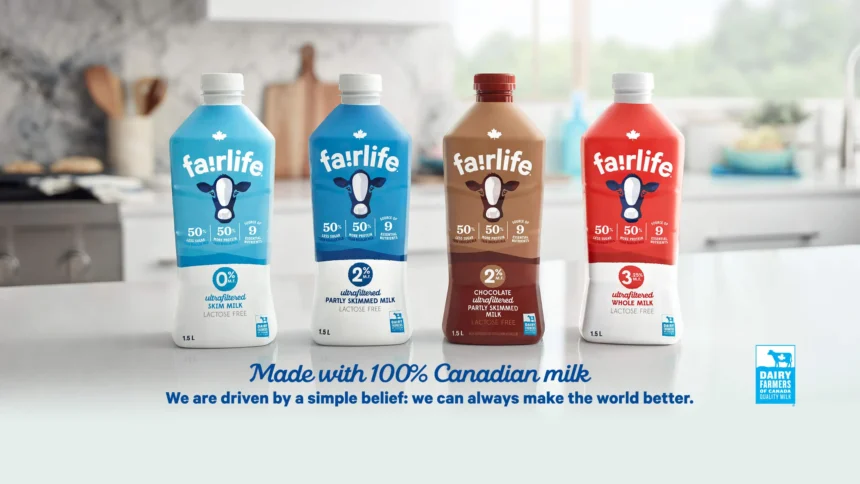
If you’ve reached for Fairlife milk at your usual grocery store and found an empty shelf, you’re not alone. Shoppers across the country have reported inconsistent availability — sometimes for days, sometimes for weeks at a stretch. It’s not a recall, and it’s not your imagination. It’s a supply problem with several overlapping causes.
This article breaks down why Fairlife keeps going out of stock, how to tell whether you’re dealing with a local issue or something broader, and what practical steps you can take right now to find it or replace it.
What Makes Fairlife Different — and Why Demand Has Grown So Fast
Fairlife isn’t processed like conventional milk. It goes through an ultra-filtration process that separates milk into its core components — water, protein, fat, lactose, vitamins, and minerals — and then recombines them in different ratios. The result is a milk with more protein, less sugar, and no lactose compared to standard dairy milk.
That profile has broad appeal. People managing lactose intolerance use it as a straightforward dairy swap. Fitness communities use it to hit protein targets without adding a separate supplement. Families who go through milk slowly appreciate that Fairlife has a longer refrigerated shelf life than conventional milk when unopened.
All of that adds up to a fast-growing customer base. The problem is that demand has expanded faster than production capacity can comfortably keep up with — and that gap is part of what shows up as empty shelves.
The Real Reasons Fairlife Goes Out of Stock
There isn’t a single cause here. Several factors have stacked on top of each other over time.
Production isn’t easy to scale quickly
Ultra-filtration requires specialized equipment and dedicated facilities. You can’t just run more volume through a standard dairy plant. Building out that kind of infrastructure takes significant time and investment, which means production capacity hasn’t grown as fast as consumer demand.
Fairlife is majority-owned and distributed by Coca-Cola, which handles logistics through its beverage distribution network. That’s a powerful system, but it also means any bottleneck in filtration, bottling, or cold-chain delivery can quickly affect how much product actually reaches store shelves.
Pandemic disruptions left a mark
Like much of the food and beverage industry, Fairlife’s supply chain was hit by pandemic-era challenges — temporary plant slowdowns, workforce limitations, transportation gaps, and packaging constraints. Those disruptions created availability gaps that took time to recover from, and some of their effects lingered longer than expected.
Specific product lines have seen demand spikes
Fairlife’s high-protein shakes and Nutrition Plan products became particularly popular in fitness and weight-management communities. Demand for those lines grew quickly, sometimes outpacing what volume forecasts anticipated. When one product variant runs short, shoppers often notice gaps across the broader Fairlife shelf space.
Packaging and logistics constraints
Industry-wide pressure on packaging materials — plastic bottles, caps, cartons — and cold-chain logistics has affected many specialty dairy brands, not just Fairlife. Even when the raw milk supply is sufficient, constraints further down the production and distribution chain can limit how much finished product ends up in stores.
Is This a Nationwide Shortage or a Local Stock Problem?
This distinction matters, and it’s worth thinking through before drawing conclusions.
Many shoppers who can’t find Fairlife are dealing with a localized issue, not a national one. One region or retailer may be consistently out of stock while stores in another city have no trouble at all. A shopper in a large metro area with multiple distribution points nearby may see Fairlife on the shelf every week, while someone in a smaller market or rural area experiences regular gaps and longer restocking windows.
Store-level ordering decisions also play a role. Retailers set their own purchasing volumes and have different allocation agreements with distributors. If a local store under-orders or gets deprioritized in a regional distribution run, shelves go bare — even if the product exists somewhere in the supply chain.
It’s also worth being clear about what this is not. There is no current nationwide recall or active safety issue tied to Fairlife milk shortages. This is a supply and distribution problem, not a health concern. Conflating the two can cause unnecessary alarm, so it’s worth keeping that distinction in mind when you see social media posts about Fairlife being “gone from stores.”
How to Find Fairlife When Your Usual Store Is Out
There are a few practical steps worth trying before giving up or switching brands permanently.
Use Fairlife’s product locator. Fairlife’s website has a store finder at fairlife.com/where-to-buy where you can enter your ZIP code and see which nearby retailers carry specific products. It’s a quick way to check whether a big-box store or warehouse club in your area still has stock, even if your usual supermarket doesn’t.
Call ahead before making a trip. Especially if you’re looking for a less common SKU, a quick phone call to confirm stock saves time. Not every store keeps their online inventory current.
Check online grocery platforms. Delivery services and online grocery retailers sometimes carry stock even when physical stores are bare. It’s worth a look if you’re not finding it locally.
Buy a few extra cartons when you find it. Because Fairlife’s ultra-filtered milk has a longer unopened refrigerated shelf life than conventional milk, stocking two or three cartons at once is reasonable. That gives you a buffer without clearing the shelf for other shoppers.
Alternatives Worth Considering If Fairlife Stays Hard to Find
If shortages in your area are persistent, it’s worth knowing what products can genuinely substitute for Fairlife rather than just settling for whatever’s available.
Other ultra-filtered milks
Fairlife isn’t the only brand using ultra-filtration. A few other companies produce similar products — higher protein, lower sugar, longer shelf life — under different labels. Comparing nutrition panels side by side is the simplest way to find something close. Protein per serving and sugar content are the two numbers most Fairlife users care about.
Lactose-free dairy milk
If your main reason for choosing Fairlife is lactose intolerance rather than the protein boost, a standard lactose-free dairy milk — like Lactaid or a store-brand equivalent — handles that need well. The protein and sugar ratios won’t match Fairlife exactly, but it’s a reliable everyday swap, especially for families or anyone using milk in cooking and baking.
For high-protein goals
If you rely on Fairlife specifically because of its protein content — for smoothies, post-workout nutrition, or calorie-tracked diets — other ready-to-drink protein shakes from brands like Muscle Milk or Premier Protein can fill a similar role. They’re different products in format, but they serve a comparable nutritional function. Checking labels for protein per serving, added sugars, and calcium content helps narrow down what actually fits your needs.
A note on adjusting recipes
If you use Fairlife in baking, coffee drinks, or smoothies, almost any dairy or lactose-free milk will work as a substitute without changing results much. The higher protein content in Fairlife doesn’t typically affect texture or flavor in recipes the way fat content does, so the swap is usually straightforward.
What to Watch Going Forward
The availability situation with Fairlife appears to be semi-evergreen — tied to long-term demand growth and the inherent complexity of scaling a specialized production process, rather than a single crisis with a clear resolution date.
Any meaningful improvement in availability would likely come from expanded production capacity, new facilities, or adjusted distribution agreements. Neither Fairlife nor Coca-Cola has made widely reported public commitments to specific timelines on that front, so it’s worth staying realistic rather than expecting a quick fix.
In the meantime, regional and retailer-level differences will continue to shape the experience. Some shoppers will have no trouble finding Fairlife week to week. Others will continue to see gaps. Knowing how to use the product locator, which stores in your area tend to carry it, and which alternatives work for your needs puts you in a better position regardless of how supply conditions shift.
For broader business and consumer news context, The Weekly Business covers supply chain developments and market trends that often touch on exactly these kinds of availability issues.
The short version: Fairlife’s empty shelves are the result of strong demand meeting a production process that isn’t easy to scale fast. It’s not a recall, not a safety issue, and not necessarily happening everywhere at once. With a little flexibility on where you shop — and a backup plan in mind — most shoppers can work around it without much disruption.
Read Also: